Онлайн трансляция | 12 сентября
Название трансляции
- 12 сентября 2015 Название трансляции
- 12 сентября 2015 Название трансляции
- 12 сентября 2015 Название трансляции
- 12 сентября 2015 Название трансляции
- 12 сентября 2015 Название трансляции
- 12 сентября 2015 Название трансляции
- 12 сентября 2015 Название трансляции
- 12 сентября 2015 Название трансляции
articles
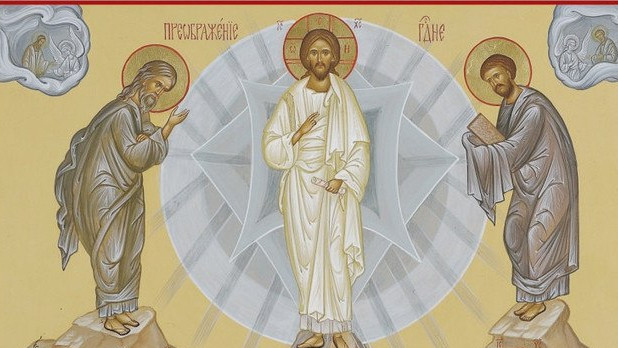
The Transfiguration of the Lord — An Image of Our Spiritual Transformation
According to ancient tradition, the Lord Jesus Christ was transfigured forty days before His Passion. Originally, the Feast of the Transfiguration was commemorated in February, but the Church transferred its celebration to August, since a February celebration would coincide with Holy Forty Days—the period of Great Lent, repentance, and sorrow. The Feast of the Transfiguration of the Lord, however, is filled with a different kind of spiritual joy: in it, the Church contemplates the glory of the Savior and the foreshadowing of the age to come.
September 14 (September 27 according to the New Style) is the Feast of the Exaltation of the Cross of the Lord—the day when the Church once again commemorates the sufferings and Crucifixion of the Savior. Since the Transfiguration took place forty days before the Crucifixion, the Holy Fathers, counting forty days from the Exaltation, established the celebration of the Transfiguration on August 6 (August 19 according to the New Style).
The Lord knew that the time of His sufferings and death was approaching. He also knew the weakness of the human heart: when the disciples saw Christ humiliated, mocked, suffering, and dying on the Cross, they might have wavered in their faith. Therefore, before the Cross, the Savior revealed His divine glory to them. It was as though He had beforehand lifted the veil over the mystery that was to be accomplished on Golgotha, so that they would understand: Christ was going to His Passion not out of weakness, nor because He had been overcome by His enemies, but voluntarily, out of love for the human race.
Saint Ephraim the Syrian says: “The Lord revealed His Kingdom to them beforehand… before His humiliation, and His honor before His dishonor, so that when He would be seized and crucified by the Jews, they might know that He was crucified not through weakness, but by His own good pleasure, voluntarily, for the salvation of the world.”
This is the profound connection between Tabor and Golgotha. The glory of the Transfiguration cannot be separated from the Cross. The same Christ who shone with divine light on Tabor would shortly be spat upon, beaten, and crucified. Yet Tabor reveals to the disciples the true meaning of Golgotha: behind the Savior’s outward humiliation remains His unchanging divine glory.
The Lord took only three disciples with Him up Mount Tabor—Peter, James, and John. It was no coincidence that Judas was not among them. Blessed Theophylact of Bulgaria says: “The Lord Christ did not take the twelve disciples up the mountain, because Judas was unworthy to behold the glory of Christ’s Transfiguration with his treacherous eyes.” Saint John of Damascus says: “The ungodly shall not behold Thy glory, O Christ God.” Yet if the Lord had taken all the Apostles except Judas, the latter would have been filled with anger and hatred not only toward Christ but also toward all the Apostles. Blessed Theophylact adds: “If the Lord had left Judas alone at the foot of the mountain and taken the others with Him, some people might have said that it was precisely this circumstance that wounded Judas’ heart and led him to consider betraying his Master.”
Why, then, did the Lord take Peter, James, and John with Him?
Peter was the first to confess Christ as the Son of God: “Thou art the Christ, the Son of the living God.” Therefore, he was to see the confirmation of his confession in the glory of the Transfiguration. He took James because he was destined before the others to die for Christ, to drink His cup and be baptized with His baptism: “And he [Herod] killed James the brother of John with the sword.” John, a virgin and the purest vessel of theology, was to become a special witness to the divine glory of the Son of God and later proclaim to the world: “In the beginning was the Word, and the Word was with God, and the Word was God.”
According to the Law, three people were sufficient to bear witness to the revelation of God’s glory, and, in the words of Saint Proclus, they “represented in their persons, according to the spirit, all the other Apostles as well.”
The Lord led the disciples up a high mountain.
Blessed Theophylact of Bulgaria says: “He leads them up a high mountain to show that he who does not rise above earthly things is unworthy of such heavenly contemplation and salvation.”
Exhausted from the journey and the night of prayer, the Apostles fell asleep. When they awoke, they saw the Lord in glory, and beside Him Moses and Elijah, conversing with Him.
Before the disciples stood representatives of the Law and the Prophets. Moses, who had died and been buried, and Elijah, who had not tasted death, bore witness to Christ’s authority over life and death. Saint John Chrysostom says that they appeared in order to show that “Christ has authority over life and death, and rules over heaven and earth.”
Saint Ephraim the Syrian says: “The prophets and Apostles who ascended the mountain were filled with joy—the prophets rejoiced because here they saw His humanity, which they had not seen before; the Apostles rejoiced because here they saw the glory of His divinity, which they had not previously understood… Thus, the mountain represented the Church, because on it Jesus united the two covenants received by the Church and showed that He is the Giver of both.”
It is especially important that at the very moment when Christ’s glory was revealed, the Lord continued speaking with the prophets about His coming sufferings. Human thought tends to separate glory from the Cross, and joy from sorrow. But in the Gospel they are united. Tabor does not abolish Golgotha; rather, the revelation of divine glory strengthens the disciples for the trials that lie ahead.
This is why Peter, remaining in indescribable wonder, said: “It is good for us to be here.” He wanted to remain on the mountain, where there was neither suffering nor fear nor the approaching Golgotha. But the Lord did not allow the disciples to remain on Tabor. They still had to descend from the mountain and follow Christ along the path that led to Jerusalem and the Cross.
The same is true in the life of a Christian. There are moments of spiritual joy and consolation when the Lord sometimes allows a person to experience consolation, spiritual joy, and a special closeness to God. But these experiences are not an end in themselves. After Tabor, a person must return to his duties, to the struggle against his passions, to patience, and to service of his neighbor. The joy of Tabor is given for strengthening us on the journey, not so that a person might avoid the Cross.
When Peter said, “It is good for us to be here,” the voice of the Heavenly Father was heard: “This is My beloved Son, in Whom I am well pleased; hear ye Him.”
These words have a direct bearing on each of us. Christ must be not only the object of our veneration, but also the Lord of our life. “Hear ye Him” means accepting His word even when it contradicts our desires; forgiving when we want to take revenge; humbling ourselves when we want to exalt ourselves; enduring when we want to flee from sorrow; remaining silent when we want to condemn; doing good when it goes unnoticed.
A person often wants to transform his life without transforming himself. He wishes to change his circumstances, the people around him, and the conditions of his life, but fails to notice that the main source of disorder lies in his own heart.
Therefore, the Feast of the Transfiguration of the Lord reminds us not only of the great event on Mount Tabor. It reminds every Christian of the need to live in such a way that his heart may gradually be freed from everything that distances him from God. We should not seek special spiritual experiences or expect a reward for our labors, but humbly do what the Lord has commanded, remembering: “We are unprofitable servants. We have done that which was our duty to do” (Luke 17:10).
And if, despite his weakness, a person strives day after day to remain faithful to Christ, to repent of his falls, to struggle against sin, to forgive his neighbors, and to keep the commandments, then little by little the most important transformation takes place—the transformation of his inner life through the action of God’s grace.
Редакция сайта www.lavra.ua
Featured

Другие публикации

To signed up and receive Lavra’s emails and important news once a week.
You will be able to unsubscribe from emails at any time.
Spelling error report
The following text will be sent to our editors: