
Онлайн трансляция | 12 сентября
Название трансляции
- 12 сентября 2015 Название трансляции
- 12 сентября 2015 Название трансляции
- 12 сентября 2015 Название трансляции
- 12 сентября 2015 Название трансляции
- 12 сентября 2015 Название трансляции
- 12 сентября 2015 Название трансляции
- 12 сентября 2015 Название трансляции
- 12 сентября 2015 Название трансляции
Spirital treasure

Through this Prayer a Person, by Grace, Attains Deification and Becomes an Angel on Earth
“As the deer longs for the springs of water, so longs my soul for You, O God. My soul has thirsted for God, the mighty, the living God: when shall I come and appear before the face of God?” — thus speaks the Psalmist David.
It is said that deer feed not only on grass, but also on snakes — even poisonous ones. When a deer swallows a venomous snake, it is seized by an unbearable thirst. This thirst gives rise within it to a strong desire to rush in search of a spring of water: to quench its thirst and, more importantly, to neutralise the venom. For if it delays and does not find a stream in time, the poison that has entered its body will kill it.
Sin, and the devil, is a spiritual serpent, poisoning the soul with the venom of pleasure. A man feels the burning reproach of conscience when he commits sin. Conscience, inner anxiety, and the pain of the soul compel him to run to the source of eternal life — to hasten to the Church of God and to the mysteries of the Church — that he may be cleansed of the poison of sin in confession, as though in the streams of a spring, and may receive the living water that flows unto life eternal.
At the feet of his spiritual father, he once again finds reunion with God: as in a spiritual bath he washes away the sores of sin together with every impurity, and departs wholly cleansed, strengthened, and with a conscience made light. Thus he is delivered from spiritual death, the cause of which was the poison of sinful delight.
The man who has sinned must, without delay, run to the Church — to this source of eternal life — for the longer he lingers, the greater becomes the immediate danger of poisoning. We must strive toward God with a fervent desire. Thus, in the Gospel we read of the Samaritan woman, who had received a great dose of the poison of sin. Yet by the grace of God, without even realising it, she encountered the Source of grace and mercy.
Christ drew near to her, gave her to drink of the living water, and the former sinner became Equal-to-the-Apostles, became a bearer of God, and, in the end, a martyr of Christ.
In order to attain a fervent desire for God and to begin, with one’s heart, the search to behold the divine countenance, one must run like the thirsty deer: seeking the eternal divine spring and the face of God. Seek with this fervent desire and with tears, for to him who thus seeketh God, the Lord Himself will, after a time, reveal the beauty of His countenance.
We monks have been specially trained to call upon the name of Christ — for therein lies the very search and ardent longing to behold the face of our Lord God. For this reason we must remember the name of Christ, if possible, as often as we breathe. Christ is the living Source of grace. The name of Christ is not like our own names, which bear within them no divine power. The name of Christ contains within it all divine gifts; it is adorned by God.
When we pronounce it, we sense help corresponding to our present need.
Christ is ever ready to come to our aid when we call upon Him. We believe that God is Spirit, and even more than Spirit — He is beyond comprehension. We cannot see Him with bodily eyes, yet we firmly believe that He is “everywhere present”; His nature is incomprehensible and unapproachable. And to the extent that we believe these divine truths, so must we believe that the name of Christ possesses all the richness of divine might and power.
Even the demons bear witness to this: they cannot endure to hear the name of Christ. Thus it was with the scribes and Pharisees, who demanded of the Apostles: “Do not preach in His name.” But the foremost Apostle Peter boldly answered them: “It is impossible for us not to speak of what we have seen and heard! We must obey God rather than men.”
And we too must submit ourselves to the will of God. “Pray without ceasing. In everything give thanks, for this is the will of God concerning you,” says the Apostle. The will of God is that we should pray continually. The God-bearing Fathers taught us to pray with the name of Christ, and explained what fruits the noetic prayer brings. Through this prayer a person, by grace, attains deification and becomes an angel on earth.
As the angels unceasingly hymn the name of God, so too the monk, or the Christian living in the world, who with fervent desire remembers the name of Christ, is granted angelic grace. In time he is restored to chastity of mind and heart, becoming pure in soul and body. During prayer, and through the action of prayer, his heart, like a cherub, hymns God in silence.
Through prayer the heart of the monk becomes a throne of God. We believe that Christ sits upon His divine throne, reigning over the whole universe. In the same manner, He sits and rests upon the throne of the heart of the person who remembers His most holy name with ardent desire and joy. The demons know this, and therefore strive with all their might — labouring greatly — to hinder the enthronement of Christ in the human heart.
They do not leave us in peace: they scatter the mind and occupy it with thousands of thoughts, all in order to prevent our mind from abiding in the heart through prayer. An uncollected mind is anywhere at all, except in the heart. Scattering and leaping from one thought to another, it becomes incapable of receiving the grace of God.
Therefore, let us be very attentive, and labour at a good beginning whose value reaches into eternity, and by which each of us may build a spiritual house — beautiful and well-proportioned — that is, our eternal dwelling.
Let us compel ourselves to lay this foundation. Yet we must do so not in order to live comfortably here on earth, receiving the grace of God and thus feeling ourselves at ease. No — we do not labour for such earthly spiritual comfort, but for eternal blessedness and salvation. No beauty, not even paradise itself multiplied by millions, can be compared with beholding the face of God. The aim of this good beginning is that, in the end, the possibility of beholding the face of God may be opened to us.
Such is the dignity of a good beginning; and knowing what great spiritual progress it brings, let us strive to lay this foundation.
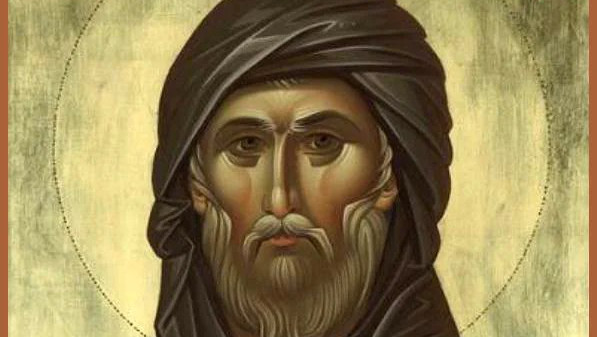
(25 November 1980. From the book: “Talks and Letters”, Volume 1: “On Prayer and Watchfulness”. Archimandrite Ephraim of Philotheou, Arizona (Moraitis).)
Редакция сайта www.lavra.ua
Featured
Другие публикации


To signed up and receive Lavra’s emails and important news once a week.
You will be able to unsubscribe from emails at any time.
Spelling error report
The following text will be sent to our editors: