Онлайн трансляция | 12 сентября
Название трансляции
- 12 сентября 2015 Название трансляции
- 12 сентября 2015 Название трансляции
- 12 сентября 2015 Название трансляции
- 12 сентября 2015 Название трансляции
- 12 сентября 2015 Название трансляции
- 12 сентября 2015 Название трансляции
- 12 сентября 2015 Название трансляции
- 12 сентября 2015 Название трансляции
Spirital treasure
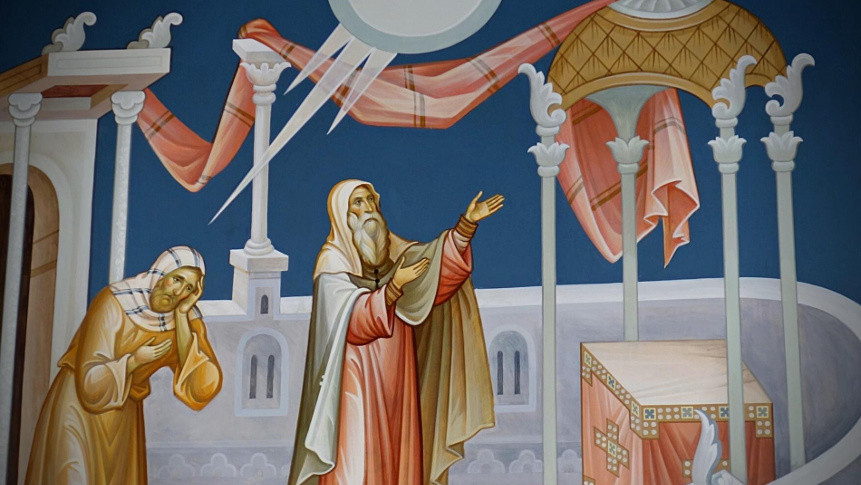
“The example of the Pharisee calls us to rid ourselves of the passion of pride and arrogance…”
Verses from the Triodes:
He who lives in a Pharisaical manner departs from the Church;
But Christ is found within you, O humble ones.
On this day, together with God, we begin the Triodion, which many of our holy and God-bearing Fathers who were poets, moved by the Holy Spirit, composed beautifully and fittingly, filling it with hymns.
This book is rightly called the Triodion, although it does not always contain triodes — for it also includes complete canons — yet, I believe, it received its name because triodes prevail within it, or from the triodes of Great Week, which, as stated above, appeared first. The intention of our holy Fathers is that through the entire book of the Triodion we may briefly recall all the benefactions of God towards us from the creation of the world: how we were created by Him; how we were expelled from the paradise of delight after rejecting the commandment given to us for perfection; how we were cast down through the envy of the first in malice, the serpent and enemy, who fell through pride; how we remained deprived of grace and led by the devil; how the Son and Word of God, in His mercy, accepted suffering, bowed the heavens, descended and dwelt in the womb of the Virgin, becoming Man for our sake and showing by His life the way to heaven — above all through humility, fasting, rejection of evil, and other works; how He suffered and rose again, and ascended once more into heaven, and sent down the Holy Spirit upon His disciples and apostles; and how they began to preach the Son of God, the perfect God; and how the divine apostles, by the cooperation of the grace of the Most Holy Spirit, through their preaching gathered all the saints from the earth and once again filled the heavenly realm — according to the original design of the Creator.
The purpose of the Triodion is also that the first three Sundays — of the Publican and the Pharisee, of the Prodigal Son, and of the Second Coming — were devised by the holy Fathers as a form of preliminary training and instruction, so that we may be attuned and prepared for the spiritual struggles of the holy fast, having abandoned defiling sinful habits.
First of all, in the first preparatory week, the Fathers set before us the parable of the Publican and the Pharisee. Just as those who go to war first undergo training under their commanders — so that, having cleansed and sharpened their weapons and prepared everything well, removing all obstacles, they may be fully armed for battle and provided with all that is necessary. Even before the fight, generals repeatedly recount battle mottos, parables, and stories that inflame courage, driving away sloth, fear, despondency, and every other evil. Thus the divine Fathers foretell the coming Lenten battle with the demons, so that we may be freed from the passions received into the soul and from the poison accumulated over a long time, and then strive to acquire those virtues which we lack, and thus, prepared and fully armed, enter upon the ascetic struggles of the fast.
Since the chief weapon for acquiring virtue is repentance and humility, and the obstacle to praiseworthy humility is pride and self-exaltation, the Fathers therefore first set before us for reflection the present parable from the Divine Gospel. The example of the Pharisee calls us to rid ourselves of the passion of pride and arrogance; the example of the Publican calls us to acquire the opposing virtues of repentance and humility. Pride and haughtiness are the chief and worst of passions, for through them the devil, once a radiant morning star, fell from heaven and became darkness. Through this same passion our forefather Adam was expelled from the garden of paradise. Thus, through these examples, the saints teach us not to exalt ourselves in our virtues, not to contend against our neighbour, but always to preserve humility; for God resists the proud but gives grace to the humble. It is better to be a sinner and repent than to be righteous and exalt oneself. “I tell you,” said the Lord, “that the Publican went down to his house justified rather than the Pharisee.” This parable calls no one to exalt himself, even if virtuous, but always to humble himself and pray to God with all his soul, even if he has fallen into the depths of evil — for salvation is near. For a publican is a tax collector who acquired wealth in a most unjust manner. A “Pharisee” means one who is “separated” or “set apart” and who surpasses others in knowledge of the law. A “Sadducee” derives from the word saddoiq, meaning “righteous,” for sedek means “justice.” Among the ancient Jews there were three teachings: Essenes, Pharisees, and Sadducees, who believed neither in the resurrection, nor in an Angel, nor in the Spirit.
Through the prayers of all Thy holy hymnographers, O Christ our God, have mercy on us.
Редакция сайта www.lavra.ua
Featured
Другие публикации


To signed up and receive Lavra’s emails and important news once a week.
You will be able to unsubscribe from emails at any time.
Spelling error report
The following text will be sent to our editors: