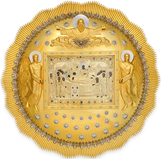
Онлайн трансляция | 12 сентября
Название трансляции
- 12 сентября 2015 Название трансляции
- 12 сентября 2015 Название трансляции
- 12 сентября 2015 Название трансляции
- 12 сентября 2015 Название трансляции
- 12 сентября 2015 Название трансляции
- 12 сентября 2015 Название трансляции
- 12 сентября 2015 Название трансляции
- 12 сентября 2015 Название трансляции
articles

St Nicholas Sviatosha: The Path of Humility and Love
St Nicholas, known in the world as Sviatoslav (Pankraty) Davidovich, was born around 1080 into a princely family. He was the eldest son of Prince David Sviatoslavich of Chernihiv and the grandson of Sviatoslav Yaroslavich, Prince of Kyiv. From childhood, Sviatoslav displayed extraordinary piety. The hours he spent in prayer at the Dormition Cathedral in Chernihiv fostered in him a desire for God rather than worldly glory. During those turbulent years, Kyivan Rus was torn apart by internecine conflicts. The young prince took part in military campaigns and battles, including events in the late eleventh and early twelfth centuries. His experience of war and destruction deepened his aversion to the vanity of power and the thirst for bloodshed.
Despite having ruled the Principality of Lutsk successfully, married and had children, Sviatoslav made a life-changing decision at around the age of twenty-nine, in 1106–1107. He abandoned his princely throne, possessions and family ties and entered the Kyiv-Pechersk Monastery, the spiritual centre of Rus. At his monastic tonsure, he received the name Nicholas in honour of St Nicholas the Wonderworker. The name Sviatosha became associated with him as a mark of his piety and humility.
In the monastery, St Nicholas began by renouncing every privilege associated with his princely rank. He refused to occupy a separate cell and spent three years living by the monastery gates, serving as a gatekeeper and setting an example of meekness and readiness to obey. He then spent another three years working in the kitchen. He chopped firewood himself, carried it from the banks of the Dnipro and prepared meals for the brotherhood. Afterwards, he served in the refectory, arranged his own cell and even planted a small orchard, tending it with his own hands. Beneath his clothing, the saint wore a hairshirt made of coarse horsehair. He observed a strict fast, ate only a small portion of the common meals and took a vow of silence to guard his heart against idle talk and pride.
His ascetic labours sprang from deep faith and an inner longing for Christ. When his relatives and his former physician, Peter, urged him to ease his austerities out of concern for his health, Nicholas replied with resolute conviction: “I am dead to temporal things.” In this way, he showed that the purpose of his life was not to prolong his earthly existence, but to attain the Kingdom of Heaven.
Renouncing power did not diminish the saint’s compassion. He distributed gifts from his former subjects among the poor and travellers, contributed to the needs of the monastery and donated liturgical books that enriched its library. At his initiative, the Gate Church of the Holy Trinity and a hospital for the poor were built at the Lavra. In this way, princely wealth was transformed into an instrument of love, imbued with the spirit of the Gospel: to comfort, heal, feed and enlighten others.
Nicholas’s life was accompanied by signs of God’s grace. Miraculous healings through his prayers strengthened the faith of those around him. The healing of his physician Peter and other such events bore witness to the living God working through His humble servant. Nor did the miracles cease after the saint’s repose in 1143. One well-known account tells of the healing of Prince Iziaslav, who regained his health after putting on the saint’s hairshirt and drinking water from a well at the Caves Monastery. During military campaigns, wearing the hairshirt served as a blessing and protection for him. The relics of the Venerable Nicholas repose in the Near Caves of the Kyiv-Pechersk Lavra and continue to be a source of grace for the faithful.
The saint lived during a period when Rus was divided into rival principalities and political power often gave rise to discord. Yet his decision to embrace monasticism became a bridge between the world and the Church. According to his Life, he did not withdraw entirely from peaceful public affairs. He sought to reconcile princes and helped resolve internecine conflicts, including a dispute in Chernihiv in 1142. His example shows that true humility does not mean passivity; rather, it gives rise to wise service for the benefit of others.
The name of Nicholas Sviatosha has been preserved in history and on the map of Kyiv. The city’s Sviatoshynskyi District commemorates his memory, while a monument recalls his intercession. His feast is celebrated on 27 October (New Style), and at the Lavra he is venerated among the Venerable Fathers of the Kyiv Caves.
For us, living in the twenty-first century, the saint’s example is simple yet profound: reject vanity, give alms, labour in obedience and place your trust in God. Humility, meekness, diligence and mercy are the true gifts that transform the world. May the example of St Nicholas Sviatosha inspire each of us to perform small but faithful acts of love and obedience, leading to the salvation of our souls and glorifying the Lord.
Редакция сайта www.lavra.ua
Featured


Другие публикации

To signed up and receive Lavra’s emails and important news once a week.
You will be able to unsubscribe from emails at any time.
Spelling error report
The following text will be sent to our editors: